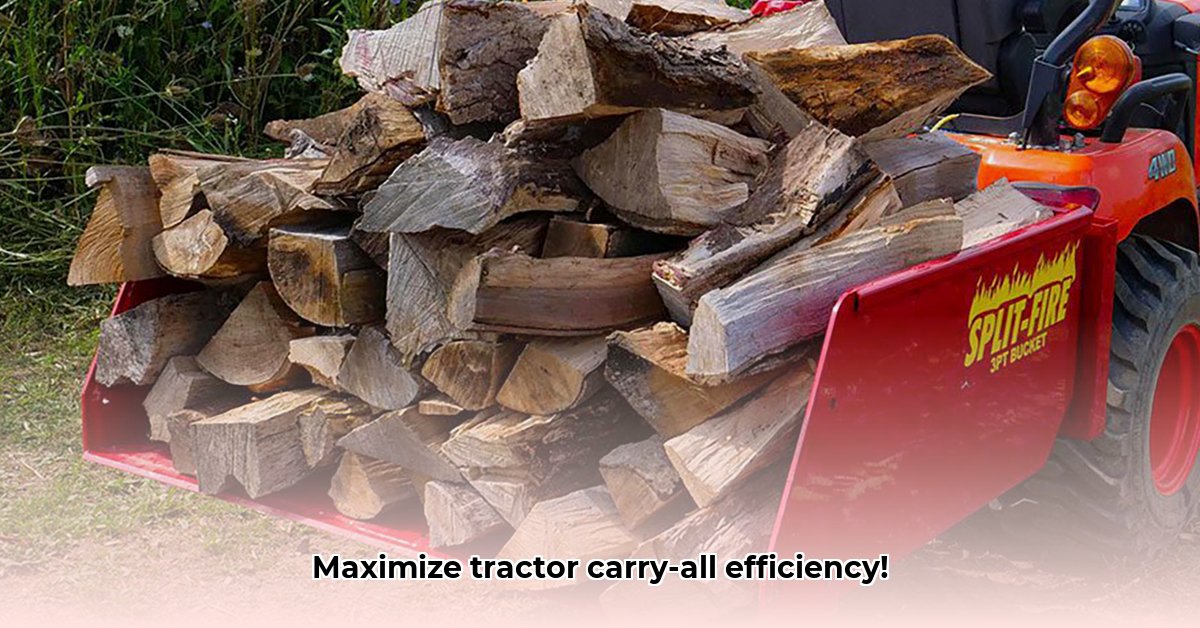
Choosing the Right Carry-All for Your Tractor
Selecting the right carry-all is crucial for boosting efficiency and minimizing your farm's environmental impact. Think of it as choosing the right tool for the job—the wrong choice can lead to wasted time, fuel, and resources. Let's explore the key considerations:
For precise tractor guidance, consider using a GPS guidance system.
Capacity: How much will you typically haul? Bushels of harvested crops, tons of compost, or smaller loads of fertilizer? Larger capacity means fewer trips, saving fuel. However, a larger carry-all also means more weight, potentially impacting fuel economy. Carefully consider your typical load weights and your tractor's lifting capacity to avoid overloading. Don't forget to factor in the weight of the carry-all itself!
Material: Steel is robust and ideal for heavy loads and rough terrain. However, its weight impacts fuel efficiency. Lighter materials, like reinforced plastic (high-density polyethylene or HDPE), are gentler on your tractor, leading to better fuel mileage and often lower initial cost. The optimal material depends on your typical loads: plastic for lighter materials (produce), and steel for heavier ones (soil, rocks).
Features: Consider features that enhance efficiency and sustainability. Sideboards prevent spills, making loading and transport safer and more efficient. A tarp protects sensitive crops or materials from the elements. Specialized compartments cater to specific materials or fertilizer application methods.
Compatibility: Ensure compatibility with your tractor's three-point hitch. Check your tractor's manual to confirm the carry-all's weight capacity doesn't exceed your tractor's lifting limits. Safety is paramount!
Environmental Considerations: Prioritize carry-alls made from recycled materials or those with a lower overall environmental impact during manufacturing and disposal. Consider the long-term costs associated with fuel consumption, maintenance, and eventual replacement.
Attaching and Operating Your Tractor Carry-All: A Step-by-Step Guide
Attaching a carry-all is straightforward, but proper procedure is essential for safety and efficiency. Here’s a step-by-step guide:
Preparation: Consult your tractor and carry-all manuals. Understand the three-point hitch system and safety precautions.
Lowering the Hitch: Carefully lower the three-point hitch arms fully to the ground.
Alignment and Attachment: Position the carry-all under the hitch arms, ensuring proper alignment of pins and connectors. Securely insert and lock the pins.
Testing the Attachment: Raise the hitch slightly to test stability. Ensure the carry-all is securely fixed. Correct any looseness before proceeding.
Loading: Distribute the weight evenly to prevent imbalance. Never exceed the weight capacity of either the carry-all or your tractor.
Safe Transport: Maintain a reasonable speed, especially on uneven terrain. Be aware of your surroundings.
Maintaining Your Carry-All: Prolonging Its Lifespan
Regular maintenance safeguards your investment and ensures safe operation. Follow this simple checklist:
Regular Inspections: Check for damage (welds, pin connections, hitch points), particularly after use on rough terrain.
Lubrication: Lubricate moving parts (pins, hinges) regularly to reduce wear. Refer to your manual for specifics.
Cleaning: Wash the carry-all after each use to remove dirt and debris, preventing rust and corrosion.
Promptly Addressing Issues: Don't ignore minor problems. Addressing them early prevents major failures and costly repairs.
Maximizing Efficiency in Sustainable Farming
A carry-all significantly enhances sustainable farming practices. It enables efficient transport of compost, reducing fuel consumption compared to multiple smaller trips. It facilitates crop collection, minimizing post-harvest losses. It's also invaluable for precise fertilizer or other amendment application.
"A well-maintained carry-all drastically improves efficiency," says Dr. Emily Carter, Agricultural Engineer at the University of California, Davis. "It reduces fuel consumption, minimizes labor, and allows for more precise application of essential inputs, contributing significantly to sustainable farming practices."
Case Studies: Real-World Successes
Many farmers leverage carry-alls for diverse sustainable applications. One farmer, using a custom-modified carry-all, precisely distributes organic fertilizers based on soil test results. This approach reduced fertilizer waste and boosted crop yields. Another farmer used their carry-all to transport water to areas experiencing drought, thus maximizing the effectiveness of water application.
Pros and Cons of Tractor Carry-Alls
| Feature | Pros | Cons |
|---|---|---|
| Capacity | High-volume transport, fewer trips, increased efficiency | Limited by tractor capacity; overloading can cause damage. |
| Versatility | Adaptable for various tasks with attachments | Requires specific attachments; added cost. |
| Fuel Efficiency | Fewer trips reduce fuel consumption and emissions | Carry-all weight itself can affect fuel consumption. |
| Cost | Initial investment; long-term savings on labor and transport | Maintenance and potential repair costs. |
| Environmental Impact | Reduced emissions; potential for reduced waste | Manufacturing and disposal impacts; choose recycled materials. |
Investing in a suitable carry-all is a smart investment in efficiency and sustainable practices. By following this guide, you can optimize your farm operations and contribute to environmentally conscious farming.